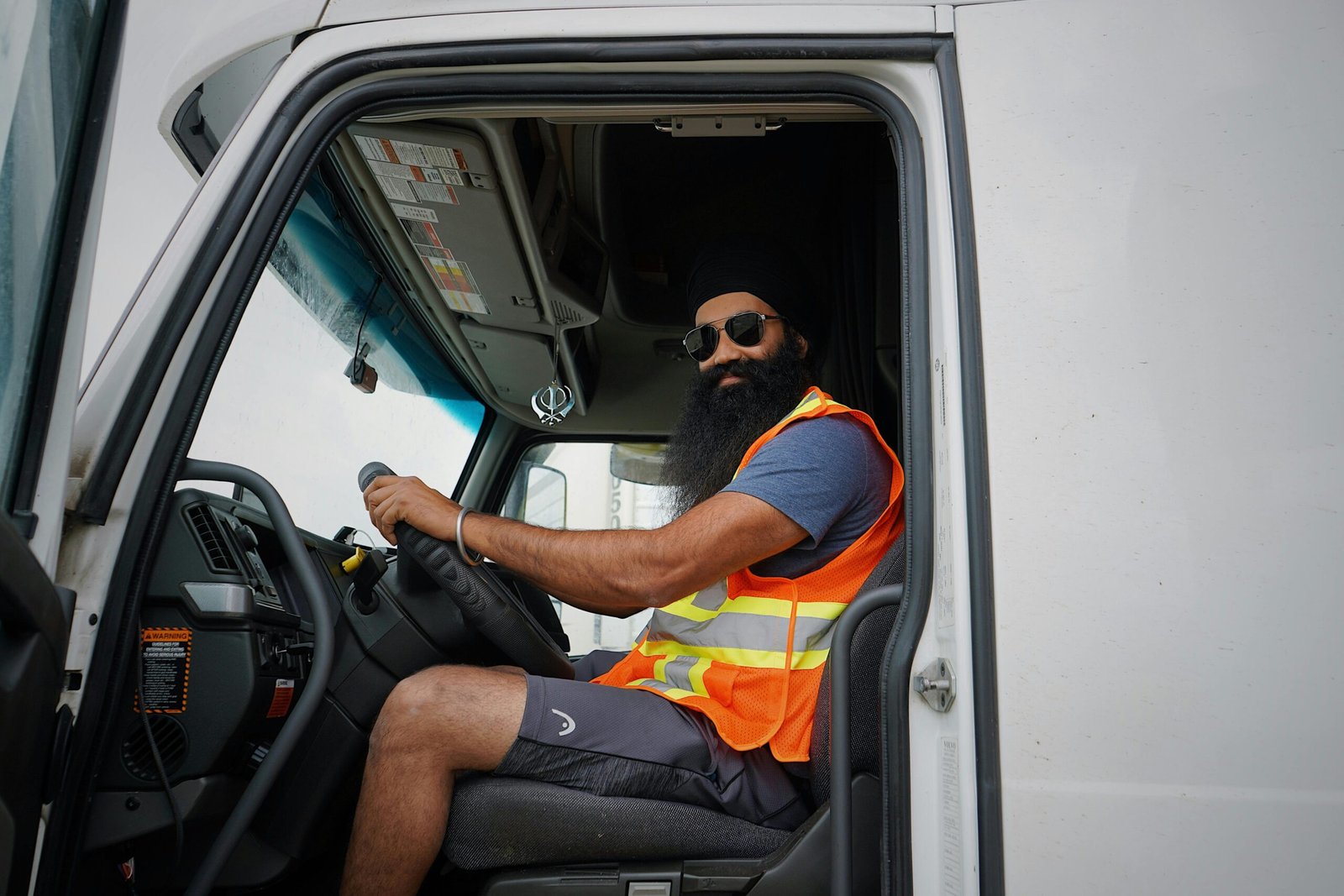
What if I told you that within just 3-6 months, you could be earning $60,000-$80,000 annually driving across some of the most beautiful landscapes in the world—and you don’t need any previous experience to get started? Sounds too good to be true? It’s not. Canada’s trucking industry is facing a critical driver shortage, and companies are so desperate for qualified drivers that they’re willing to train you from scratch, often at no cost to you.
Truck driving jobs in Canada with no experience required and training provided represent one of the most accessible pathways to a solid middle-class income available today. No expensive university degree needed. No years of unpaid internships. Just your willingness to learn, work hard, and embrace life on the road.
In this comprehensive guide, we’ll walk you through exactly how complete beginners are breaking into the trucking industry, which companies offer the best training programs, what you can realistically expect to earn, and how to position yourself for success even if you’ve never sat behind the wheel of a commercial vehicle. Whether you’re looking for a complete career change or just entering the workforce, this opportunity is more accessible than you might think.
Why Canada Desperately Needs Truck Drivers
Canada’s economy literally runs on trucks. Approximately 90% of consumer goods in Canada are transported by truck at some point in their journey. From the food in grocery stores to the materials building homes to the packages arriving at doorsteps—trucks move it all.
Here’s the problem: Canada is short roughly 25,000-30,000 truck drivers right now, and this gap is projected to grow to over 55,000 by 2028. The current driver workforce is aging rapidly, with the average Canadian truck driver now in their late 40s to early 50s. Retirements are accelerating while fewer young people are entering the profession.
This shortage creates enormous opportunity for newcomers. Trucking companies can’t afford to be picky anymore—they need drivers urgently and are willing to invest in training people with zero experience. The leverage has shifted dramatically in favor of job seekers.
Additionally, Canada’s vast geography means trucking will always be essential. Unlike some industries vulnerable to automation in the near future, long-haul trucking across diverse Canadian terrain and weather conditions requires human skill and judgment that technology can’t yet replicate. Your investment in becoming a truck driver offers genuine long-term career security.
Understanding Truck Driver Training Programs in Canada
When we say “training provided,” what does that actually mean? Let’s break down how these programs work:
Company-Sponsored Training Programs: Major carriers like Bison Transport, Challenger Motor Freight, and Day & Ross offer comprehensive programs where they pay for your Class 1 license training. You attend an approved driving school (2-8 weeks typically), and the company covers tuition costs—often $8,000-$15,000 worth of training completely free to you.
The Trade-Off: In exchange for free training, you typically commit to working for that company for 1-2 years. If you leave early, you may owe prorated training costs. This is standard and fair—they’re investing significantly in you.
Government-Funded Programs: Some provinces offer subsidized training through employment programs, particularly for unemployed individuals, newcomers, or career changers. Programs through provincial workforce development agencies can reduce or eliminate training costs.
Apprenticeship Models: Some companies use mentorship-based training where you work alongside experienced drivers, learning on the job while earning reduced wages during the training period (typically $18-22/hour while training, jumping to $55,000-$70,000+ once certified).
What Training Covers: Comprehensive programs include pre-trip inspections, backing and maneuvering techniques, highway driving, load securement, hours-of-service regulations, defensive driving, winter driving conditions, logbook management, and cross-border procedures if applicable.
Top Canadian Trucking Companies Offering Free Training
Bison Transport: Headquartered in Winnipeg, Bison is one of Canada’s largest carriers and well-known for their training commitment. They offer a comprehensive driver training program, cover Class 1 licensing costs, provide ongoing mentorship, and offer competitive starting pay around $55,000-$65,000 annually. Known for treating drivers well and promoting from within.
Challenger Motor Freight: Another major Canadian carrier with excellent training programs. They provide paid training, modern equipment, and clear advancement pathways. Starting drivers typically earn $50,000-$60,000, with experienced drivers reaching $70,000-$85,000+.
Day & Ross (a division of McCain): Offers driver training programs across Canada, particularly strong in Atlantic Canada and Ontario. Solid benefits package, stable employment with a well-established company, and starting compensation around $55,000-$65,000.
Kriska Transportation: Family-owned company with outstanding driver training and retention programs. Known for excellent equipment maintenance and driver support. They invest heavily in new driver training and offer competitive wages starting around $58,000-$68,000.
TransX Group of Companies: Western-based carrier with extensive training programs. They operate across North America and offer opportunities for both local and long-haul routes. Starting pay typically $52,000-$62,000 with excellent benefits.
Titanium Transportation: Ontario-based company expanding rapidly. They offer comprehensive training programs and emphasize technology and modern fleet. Competitive compensation starting around $55,000-$68,000.
Many smaller and regional carriers also offer training programs. Don’t overlook local companies—they often provide better work-life balance with more home time, though potentially slightly lower pay than long-haul positions.
Realistic Salary Expectations and Earning Potential
Let’s talk real numbers, because understanding earning potential is crucial for making informed decisions:
Entry-Level (First Year): Most newly licensed drivers working with training-provider companies earn $50,000-$65,000 in their first full year. This typically includes base mileage pay plus potential bonuses. Some earn less if working locally with more predictable home time ($45,000-$55,000), while aggressive long-haul drivers can push toward $70,000.
Years 2-5: As you gain experience, demonstrate reliability, and potentially specialize (tanker, flatbed, oversized loads), income typically rises to $65,000-$85,000. Many drivers in this range work for the same company where they trained, benefiting from seniority and familiarity.
Experienced Drivers (5+ years): Skilled drivers with clean records and specialized endorsements regularly earn $80,000-$95,000. Owner-operators (independent contractors with their own trucks) can exceed $100,000-$150,000, though they also bear all equipment and operational costs.
Pay Structures: Most Canadian trucking jobs pay per mile/kilometer (typically $0.45-$0.65 per mile for company drivers) rather than hourly. This means your income directly correlates with miles driven. Some local positions pay hourly ($24-$32/hour), offering more predictable but often lower annual income.
Additional Income Opportunities: Many drivers boost earnings through border-crossing pay, extra stops/deliveries bonuses, safety bonuses (accident-free quarters), referral bonuses for recruiting other drivers, and taking loads other drivers don’t want (difficult routes, tight timeframes).
Real Success Story: From Unemployed to Six Figures
Meet James, a 38-year-old former factory worker from Hamilton, Ontario. When his manufacturing plant closed in 2022, James faced unemployment with limited transferable skills and a mortgage to pay. “I’d always enjoyed driving, but I never considered trucking seriously,” he told me. “I thought you needed connections or years of experience.”
Researching options, James discovered Bison Transport’s training program. “They literally handed me a career. Training was intense—those first weeks in driving school were intimidating—but the instructors were patient. They want you to succeed because they need drivers.”
Bison covered his entire Class 1 licensing costs (approximately $10,000 value). After six weeks of training and passing his exams, James hit the road with a mentor for three weeks before going solo. “My first paycheck was around $1,100 for the week. I remember thinking, ‘This is real.’”
In his first full year, James earned $58,000. Year two brought $72,000. Now, three years in, he’s specialized in refrigerated transport, earns $88,000 annually, and recently purchased his first truck with plans to become an owner-operator. “I went from unemployed and terrified to financially stable. Trucking gave me my dignity back and a future I can actually plan for.”
James’s journey isn’t exceptional—it’s increasingly common across Canada’s trucking industry.
Requirements: Can You Actually Qualify?
Here’s what you genuinely need to break into truck driving with no experience:
Age: Minimum 18 years old for intra-provincial driving (staying within one province). For inter-provincial or cross-border driving, most companies require 21+ due to insurance requirements.
Driver’s License: Valid Class 5/G license (regular car license) with a clean or nearly clean record. Most companies accept minor infractions if you’re upfront about them, but serious violations (DUIs, excessive speeding, multiple at-fault accidents) are typically disqualifying for at least 3-5 years.
Medical Fitness: You must pass a commercial driver medical examination. This checks vision, hearing, blood pressure, and overall physical fitness. Standards are reasonable—you don’t need to be an athlete, just generally healthy. Conditions like controlled diabetes or corrected vision are typically acceptable.
Background Check: Criminal background checks are standard. Most companies accept candidates with minor criminal history, but certain serious convictions may be barriers. Honesty during application is crucial—lying about your record is grounds for immediate dismissal.
Language Skills: Functional English or French proficiency (depending on region) is necessary for safety, regulation compliance, and communication. You’ll need to read signs, understand regulations, and communicate with dispatch and customers.
Physical Capability: Trucking is more physically demanding than many realize. You’ll climb in and out of the cab repeatedly, secure loads, perform pre-trip inspections, and occasionally help with loading/unloading. Mobility and reasonable fitness matter.
No Formal Education Required: High school completion is preferred but not always mandatory. The focus is on your ability to learn, follow regulations, and drive safely—not your academic credentials.
If you meet these basic requirements, you’re qualified to apply for training programs.
The Training Process: What to Expect Week by Week
Weeks 1-2: Classroom Foundation – You’ll learn commercial vehicle regulations, hours of service rules, logbook management, cargo securement principles, hazard recognition, and map reading. Expect written tests and homework. It’s intensive but manageable if you study.
Weeks 3-4: Yard Training – This is where you actually start driving trucks in controlled environments. You’ll practice pre-trip inspections (memorizing the sequences is crucial), basic maneuvers (straight-line backing, offset backing, parallel parking), coupling and uncoupling trailers, and low-speed control. Most students find this challenging initially but improve rapidly.
Weeks 5-6: Road Training – You’ll hit public roads with instructors, initially on quiet routes, gradually progressing to highways and busier traffic. You’ll practice shifting (if learning manual transmission), lane management, turning with trailers, highway merging, and managing traffic interactions.
Week 7-8: Test Preparation and Certification – Final week focuses on test preparation. You’ll refine pre-trip inspection routines, practice the exact maneuvers required for the road test, and complete practice exams. Most students take their Class 1 road test in week 7 or 8.
Post-Licensing: Mentor Period – After getting your Class 1 license, you typically spend 2-4 weeks driving with an experienced mentor who rides with you on actual company routes. This builds confidence and teaches real-world skills schools can’t cover.
Going Solo: Once released to solo driving, you’re a fully-fledged truck driver earning full wages. The company continues supporting you, but you’re independent.
The entire process, from starting training to going solo, typically takes 3-6 months depending on program structure.
Day-to-Day Reality: What Truck Driving Actually Involves
Long-haul trucking (the most common entry point for new drivers) means extended time away from home—typically 2-3 weeks on the road followed by 3-5 days home. You’ll sleep in your truck’s sleeper berth most nights, eating at truck stops or preparing simple meals with in-cab appliances.
Your daily routine involves pre-trip inspections (checking everything from tire pressure to brake systems), driving 400-600 miles per shift, managing your hours to comply with regulations (maximum 13 hours driving per day, mandatory rest periods), coordinating with dispatch about loads and routes, and completing required paperwork/electronic logs.
The work demands intense focus during driving hours. You’re responsible for $100,000+ vehicles and potentially millions in cargo. Weather conditions—particularly Canadian winters—require skill and caution. Highway hypnosis is real; maintaining alertness during long, monotonous stretches challenges everyone.
Lifestyle considerations are significant. You’ll miss family events, holidays, and regular social life. Maintaining relationships requires effort and understanding partners/families. Health management is challenging—truck stop food isn’t nutritious, and sedentary hours impact fitness. Successful drivers develop strategies: bringing healthy food, exercising at rest stops, and maintaining communication technology to stay connected with loved ones.
However, benefits include independence (you’re largely your own boss once on the road), incredible scenery (driving through Canadian wilderness beats office views), time to think and listen to audiobooks/podcasts, and genuine freedom that office environments can’t match.
Overcoming Common Fears and Concerns
“I’m not mechanically inclined”: You don’t need to be a mechanic. You’ll learn basic troubleshooting and pre-trip inspections, but companies have maintenance departments handling repairs. Your job is driving and recognizing problems, not fixing them.
“I’ve never driven anything bigger than a car”: That’s literally what training is for. Everyone feels overwhelmed initially. Competent instruction and practice build skills surprisingly quickly. If others can learn, you can too.
“What about my family?”: This is the legitimate hardest part. Many companies now offer regional or dedicated routes providing better home time (home weekly or even nightly for local positions), though usually paying slightly less than long-haul. Some drivers choose long-haul during early career-building years, then transition to local work for better life balance.
“Isn’t automation coming for trucking jobs?”: While autonomous vehicle technology is developing, fully autonomous long-haul trucking across Canadian terrain and weather conditions remains decades away. Current technology can’t handle the complexity of Canadian trucking environments. Your career is safe for the foreseeable future.
“What if I fail the tests?”: Most training programs report 80-90% pass rates. If you attend classes, study, and practice, you’ll almost certainly pass. If you do fail, most programs allow retakes. Persistence matters more than natural talent.
Application Strategy: How to Get Accepted
Step 1: Obtain Your Driver’s Abstract – Get a current copy of your driving record from your provincial licensing authority. This shows you (and employers) exactly what’s on your record. Address any issues upfront in applications.
Step 2: Research Multiple Companies – Don’t just apply to one program. Target 5-10 companies offering training. Different companies have different requirements, cultures, and benefits. Casting a wider net increases success odds.
Step 3: Prepare Honest Applications – Emphasize reliability, work ethic, willingness to learn, and any relevant experience (even if not trucking-related). Customer service, delivery, driving jobs, or mechanical backgrounds all help. Be completely honest about driving record and background—dishonesty disqualifies you permanently.
Step 4: Ace the Interview – Companies want dependable, safety-conscious, trainable people. Emphasize commitment, understanding of the lifestyle demands, and long-term career interest. Ask thoughtful questions about training structure, home time policies, and advancement opportunities.
Step 5: Be Flexible on Timing and Location – Training programs have scheduled cohorts. Being flexible about start dates and potentially traveling to training locations significantly improves acceptance chances.
FAQs Section
Q: How long am I committed to work for a company that provides free training?
A: Typically 12-24 months. This commitment is formalized in a contract stating that if you leave before the agreed period, you’ll repay a prorated portion of training costs. For example, if the company spent $10,000 on your training and you committed to two years but leave after one year, you might owe $5,000. Complete the commitment period, and you owe nothing. This is standard industry practice and protects the company’s training investment.
Q: Can I get my Class 1 license on my own instead of through company programs?
A: Absolutely. You can attend private truck driving schools (costs typically $8,000-$15,000 that you pay upfront) and get licensed independently. This gives you freedom to choose any employer without contractual commitments. However, paying out-of-pocket is expensive, and you’re not guaranteed employment afterward. Company-sponsored training eliminates cost barriers and guarantees employment, making it the better choice for most beginners.
Q: What’s the difference between Class 1 and Class 3 licenses, and which should I pursue?
A: Class 1 (Class A in some provinces) allows you to operate tractor-trailers (semi-trucks with full trailers), offering the highest earning potential and most opportunities. Class 3 (Class B in some provinces) covers straight trucks and smaller commercial vehicles, generally offering lower pay but easier learning curves and more local work. For maximum career opportunities and earnings, pursue Class 1. Most company training programs focus on Class 1.
Q: Is truck driving safe? I’m concerned about accidents and health risks.
A: Commercial trucking is substantially safer than people assume. Professional drivers have rigorous training, companies maintain equipment carefully, and regulations mandate rest periods reducing fatigue-related accidents. Statistically, experienced commercial drivers have lower accident rates than average passenger vehicle drivers. Health-wise, sedentary lifestyle and irregular eating are legitimate concerns, but drivers who prioritize exercise, healthy eating, and regular medical checkups typically maintain good health. Safety ultimately depends on your professionalism and choices.
Q: Do I need to speak perfect English or French to become a truck driver in Canada?
A: You need functional proficiency—ability to read road signs, understand regulations, communicate with dispatch and customers, and complete required documentation. Perfect fluency isn’t necessary, and many successful Canadian truck drivers speak English or French as second languages. If you can hold a basic conversation, read moderately complex text, and write simple reports, you likely have sufficient language skills. Some companies offer language support during training for strong candidates with developing language abilities.
Conclusion: Your Road to a New Career Starts Now
The opportunity to launch a trucking career in Canada with no experience and free training represents something increasingly rare in today’s economy: a genuine, accessible pathway to middle-class income without years of expensive education or existing connections. It’s a chance to take control of your financial future on your own terms.
Yes, truck driving demands sacrifice. Time away from home, challenging weather, long hours, and lifestyle adjustments are all real. But it also offers independence, solid income, job security, and the satisfaction of mastering a skilled profession. For those willing to embrace the trade-offs, trucking delivers—quite literally.
The trucking companies aren’t doing you a favor by offering training; they desperately need you. The balance of power has shifted. If you’re reliable, willing to learn, and ready to work hard, companies will invest thousands of dollars training you because they know the return on that investment benefits both parties.
Maybe you’re stuck in a dead-end job that barely pays the bills. Maybe you’re fresh out of school without direction. Maybe you’re facing unemployment and wondering how you’ll provide for your family. Maybe you just want a change—a chance to see this beautiful country from behind the wheel while earning a living wage.
Whatever brought you to this article, know this: thousands of Canadians with zero trucking experience have walked this path successfully. They sat exactly where you’re sitting now, wondering if they could actually do this. They took the leap. Many now have careers they’re proud of and financial stability they once thought impossible.
The road is calling. The training is available. The jobs are waiting. The only question left is whether you’re ready to answer.
Your future in trucking starts with a single decision: apply. That’s it. Fill out applications, make phone calls, send emails. The hardest part of this entire journey is simply beginning.
So begin. Today. Right now. Your truck is waiting, and the open road has room for one more driver—you.